Table of Contents
Why LinkedIn is Still the #1 Platform for B2B Leads in 2026
Actual LinkedIn Cost Per Lead in 2026
How Much Does a LinkedIn Lead Generation Agency Actually Cost?
Lead Generation Pricing Models: Which One Fits Your Business?
What Affects LinkedIn Lead Generation Costs?
LinkedIn vs Other Platforms: Is the High CPL Worth It?
Final Thoughts
Frequently Asked Questions
Modified On :
June 3, 2026
Key Takeaways
- LinkedIn CPL ranges from $45 to $150+ for paid ads; organic outreach through a managed service typically runs well under $100 per lead with no ad spend.
- "Average cost of hiring a LinkedIn lead generation agency" is $3,000 to $25,000/month on retainer — or $397+/month for done-for-you organic outreach like Cleverly.
- Industry matters more than channel: B2B SaaS CPL averages $237; IT services averages $503; financial services can exceed $650.
- Native LinkedIn Lead Gen Forms reduce CPL by 25-35% vs. external landing pages — always start there before testing to external pages.
- The real ROI metric isn't cost per lead; it's cost per closed deal. A $150 lead that closes at 15% beats a $20 lead that closes at 1%.
- Strategic retargeting and lookalike audiences can slash LinkedIn CPL by 40-60% while improving lead quality significantly.
B2B advertising costs have skyrocketed in 2026, forcing smart marketers to abandon the "spray and pray" approach for precision targeting that actually converts.
While Facebook CPCs climb and Google Ads become increasingly competitive, LinkedIn is the only platform that continues to deliver quality leads from decision-makers who actually have budgets to spend.
But here's the million-dollar question keeping CMOs awake at night: Is LinkedIn's premium cost per lead still justified in 2026's economic climate?
In this comprehensive breakdown, we'll reveal the real LinkedIn cost per lead benchmarks so whether you're planning your 2026 marketing budget or questioning your current LinkedIn investment, you'll walk away with concrete numbers, proven strategies, and a clear answer to the question: Is LinkedIn lead generation worth the cost?
Spoiler alert: The answer might surprise you. 🧐
Why LinkedIn is Still the #1 Platform for B2B Leads in 2026
When it comes to B2B lead generation, LinkedIn isn't just another social media platform – it's where business happens.
While other platforms chase consumer attention with flashy content and viral trends, LinkedIn has quietly built the most powerful B2B ecosystem on the internet.
And, in 2026, that advantage has only grown stronger.
LinkedIn's Unique B2B Ecosystem
Here's what makes LinkedIn fundamentally different: it's the only platform where your ideal prospects show up specifically to talk business.
Think about it – when someone logs into Facebook or Instagram, they're looking to unwind, catch up with friends, or scroll through entertainment.
But when they open LinkedIn? They're in work mode, thinking about their business challenges, career goals, and professional growth.
This mindset shift is pure gold for LinkedIn B2B marketing cost effectiveness. You're not interrupting someone's leisure time; you're joining a conversation they're already having with themselves about their business needs.
What's particularly powerful in 2026 is LinkedIn's enhanced targeting algorithms.
The platform offers hyper-specific filters that let you reach, say, "VPs of Sales at SaaS companies with 50-200 employees who've posted about lead generation strategies in the past 90 days."
Try finding that level of precision anywhere else – you simply can't.
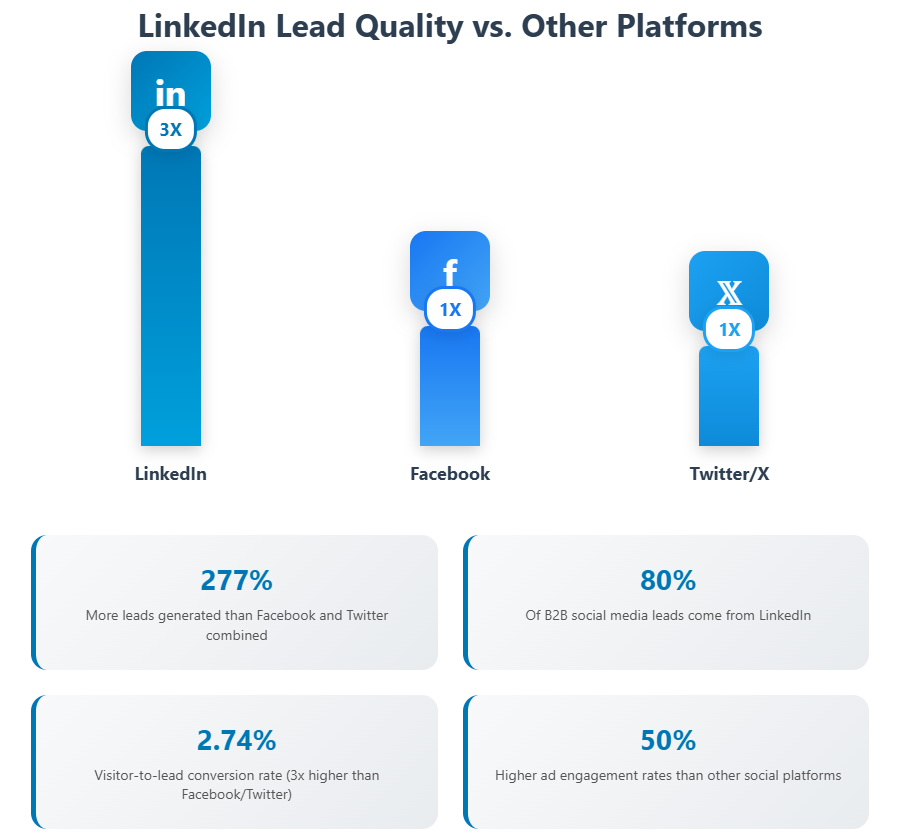
Comparison of LinkedIn Lead Quality vs. Other Platforms
Let's talk numbers for a moment.
While Facebook and Google ads might generate more volume at a lower upfront cost, LinkedIn lead generation ROI tells a completely different story when you factor in quality and conversion rates.
B2B LinkedIn leads convert at an average rate of 2.74% – nearly three times higher than leads from Facebook or Twitter.
But here's where it gets really interesting: The sales cycle for LinkedIn-generated leads is shorter than leads from other platforms.
Why?
Because LinkedIn leads come pre-qualified by context.
When someone responds to your LinkedIn outreach, they're not just showing interest – they're doing so in a professional context where they have the authority and budget to make decisions.
Compare this to someone who clicks on a Facebook ad while mindlessly scrolling during their lunch break. The intent and mindset are worlds apart.
At Cleverly, we've seen this play out across 10,000+ clients for whom we’ve generated $312 million in pipeline revenue through LinkedIn outreach. The leads aren't just more numerous – they're better. They come with higher lifetime values, shorter sales cycles, and better retention rates.
💰 Get Premium Leads Without the Premium Price
Our done-for-you LinkedIn outreach delivers qualified leads at a fraction of ad costs. Book your free strategy call today.
Actual LinkedIn Cost Per Lead in 2026
The burning question every B2B marketer asks: "What should I actually expect to pay for a quality LinkedIn lead?"
The answer isn't simple because your average LinkedIn CPL varies dramatically based on your industry, target audience, and campaign approach. But having benchmarks gives you a realistic starting point for budgeting.
CPL Benchmarks by Industry & Company Size
LinkedIn lead generation cost 2026 data shows significant variations across sectors. Here's what you can realistically expect to invest:
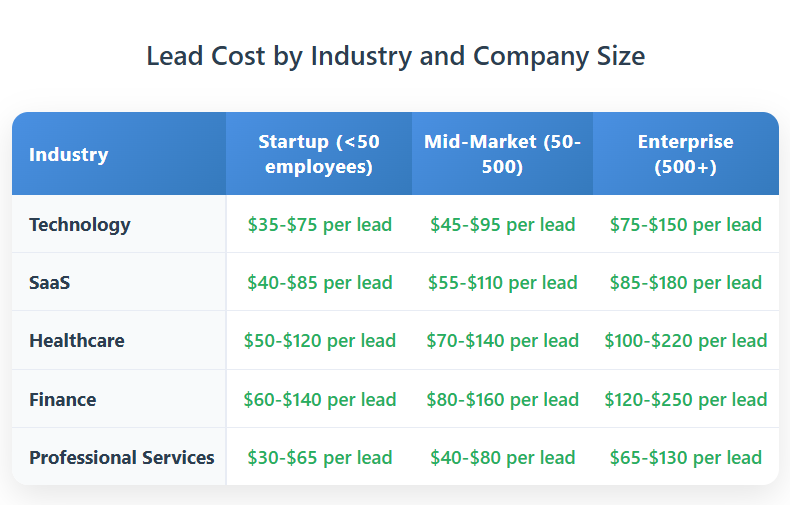
Why do enterprise-level prospects cost more?
Simple: They're harder to reach, have longer decision cycles, and represent significantly higher contract values.
A single enterprise lead might be worth $50K-$500K+ in lifetime value, making even a $200 CPL incredibly profitable.
The key insight here is that the average LinkedIn CPL isn't just about the number – it's about the math behind it. If your average deal size is $25K and you're paying $100 per lead with a 15% close rate, you're generating $3,750 in revenue for every $100 invested. That's a 37:1 return.
📚 Also Read: 10 LinkedIn Ad Mistakes That Are Costing You Leads
Average LinkedIn CPL by Channel and Industry
Average Cost Per Lead by Channel (2026)
LinkedIn paid advertising sits near the top of the cost-per-lead spectrum, but that ranking is relative to its performance. Here's how the major acquisition channels compare, according to Sopro's 2026 B2B benchmarks:
A few things worth noting: cold email at $225 and multi-channel prospecting at $188 outperform paid LinkedIn at $408 — and organic LinkedIn outreach (done-for-you) sits in the same range as cold email when managed through an agency like Cleverly, without the ad spend.
Average Cost Per Lead by Industry (2026)
CPL doesn't mean the same thing across industries. A $300 lead in ecommerce is expensive; a $300 lead in financial services is cheap. Here's the full breakdown from FirstPageSage's 2026 report:
The industry table is critical context when evaluating LinkedIn CPL benchmarks. A $150 LinkedIn CPL looks expensive if you're in ecommerce. For IT services or fintech, it's well below average.
CPL by Campaign Type (Form vs Landing Page)
Your campaign structure dramatically impacts your LinkedIn lead form cost. Here's how the two main approaches stack up:
Native LinkedIn Lead Gen Forms:
- Average CPL: $45-$95 across industries
- Conversion Rate: 8-15% (higher due to friction-free experience)
- Lead Quality: Medium to high (less qualification but higher volume)
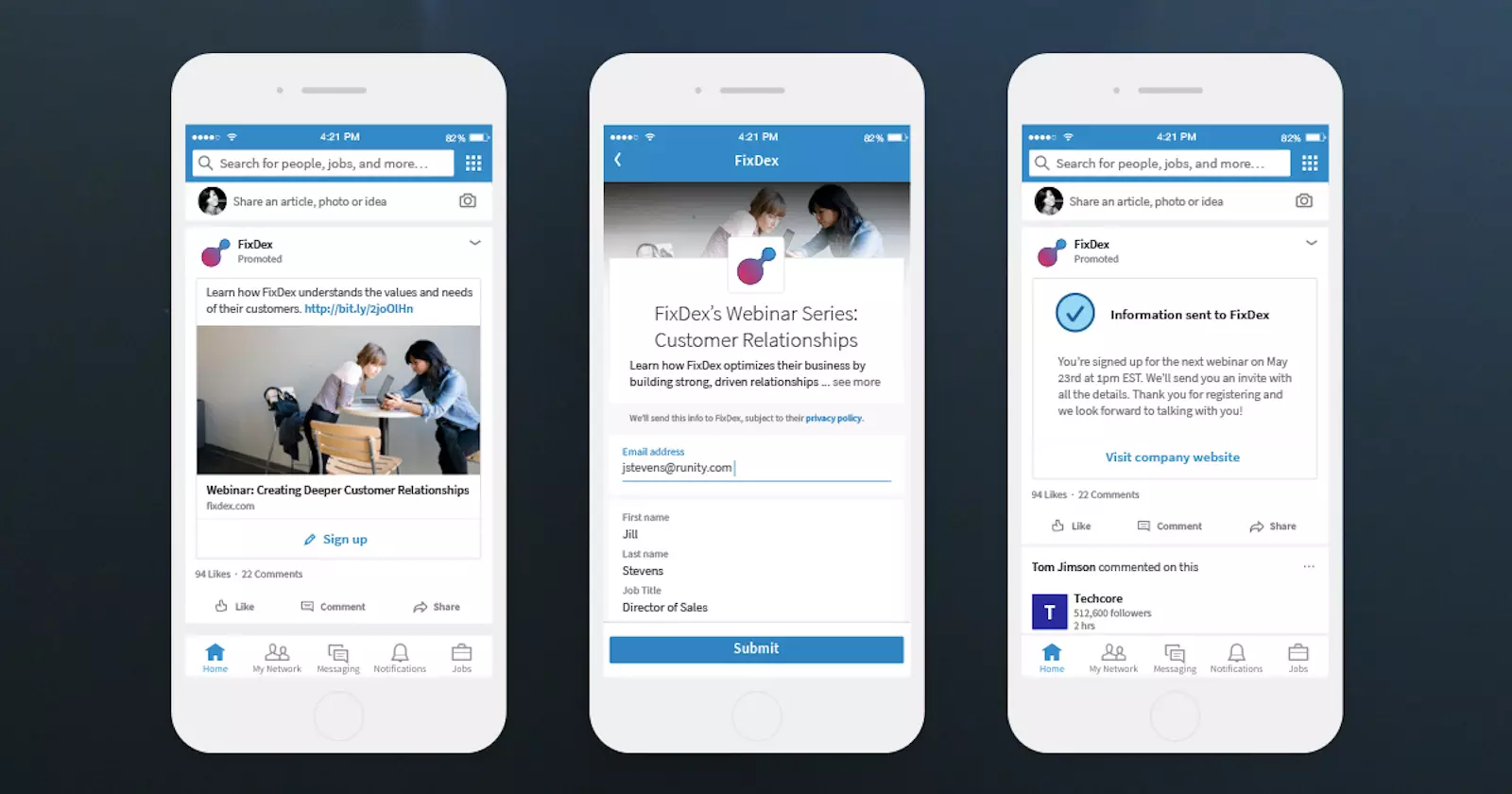
External Landing Page Campaigns:
- Average CPL: $65-$140 across industries
- Conversion Rate: 3-8% (lower due to additional steps)
- Lead Quality: High (more qualification through multi-step process)
The cost per lead on LinkedIn with native forms is typically 25-35% lower because users don't have to leave the platform.
LinkedIn pre-fills their information, removing friction and boosting conversion rates. However, external landing pages give you more control over the qualification process and data collection.
What we suggest: Start with native forms for volume and awareness, then retarget engaged users with landing page campaigns for deeper qualification. This hybrid approach optimizes both cost efficiency and lead quality, giving you the best of both worlds.
How Much Does a LinkedIn Lead Generation Agency Actually Cost?
Agency pricing for LinkedIn lead generation varies more than most buyers expect. The range is wide, and the structure matters as much as the number.
Here's what to expect across the main models:
Monthly retainer (most common): Most LinkedIn lead gen agencies — including Cleverly — charge a fixed monthly fee that covers strategy, targeting, copywriting, outreach execution, and reporting. According to Callbox, retainer-based rates for B2B lead generation services range from $3,000 to $25,000 per month depending on campaign complexity, audience size, and the number of active campaigns.
Cleverly's organic LinkedIn outreach starts at $397/month — significantly below the agency average — because the model runs on proven outreach sequences rather than custom SDR builds for each client.
Pay-per-lead: Some agencies charge $20 to $200 per lead delivered. The lower end typically means broad targeting with minimal qualification; the higher end means the agency is doing ICP research, custom messaging, and multi-touch outreach before counting a lead as billable.
The catch: without a clear definition of what qualifies as a "lead," you can end up paying for anyone who half-responded to a message.
Pay-per-appointment: A more accountable model. You pay $50 to $500 per qualified meeting booked. A comprehensive appointment-setting service — covering list building, outreach, follow-ups, and scheduling — runs $1,000 to $10,000 per month depending on volume and targeting complexity.
In-house vs. agency: the real cost comparison
Building an in-house LinkedIn outreach function isn't free. A dedicated SDR runs $76,000 to $131,000 per year in salary alone (Glassdoor), before you add PPC management costs, Sales Navigator licenses ($800/year per seat), tools, and management overhead. Most companies hit $100K+ in annual spend before seeing consistent pipeline.
Agency partnerships front-load that expertise and cut the ramp time from months to weeks. For most B2B companies, especially those under $10M ARR, the math favors outsourcing until the volume justifies in-house headcount.
📈 More Leads, Less Spend
We help you grow your pipeline with cost-effective, high-converting LinkedIn campaigns—100% organic. See how affordable lead gen can be.
Lead Generation Pricing Models: Which One Fits Your Business?
Before signing any lead gen contract, understand what you're buying — because the pricing model determines what the agency is incentivized to deliver.
Monthly retainer: You pay a fixed fee regardless of how many leads come in that month. The upside: the agency is committed to long-term performance, not just hitting a short-term lead count. The downside: without clear accountability metrics built into the contract, retainer models can drift. Always define what "success" looks like before month one.
Best for: Companies that want ongoing pipeline, not a one-time burst.
Pay-per-lead: You pay for each lead delivered. Simple in theory, messy in practice unless your definition of a "lead" is airtight. A half-interested reply to a cold InMail is not a sales-qualified lead. If you go this route, define the qualification criteria in writing: job title, company size, expressed interest, minimum response threshold.
Best for: Companies with a clear, narrow ICP and strong internal SDR capacity to qualify inbound leads.
Pay-per-appointment: The most outcome-oriented model. You only pay when a meeting is booked with a prospect who fits your ICP. Higher cost per unit, but the accountability is real. Rates range from $50 to $500 per qualified appointment.
Best for: Companies that want zero operational involvement in outreach and are willing to pay a premium for pre-qualified conversations.
Hybrid model: A base retainer covers strategy and operations; performance fees kick in above a baseline number of leads or meetings. This model aligns incentives without leaving the agency entirely on a commission-only basis (which is unsustainable and often leads to lower-quality work).
Best for: Companies that want structure without rigid contract terms.
Commission-onlyThe agency earns a percentage of revenue for deals they help close. Sounds appealing — no upfront cost — but in practice, agencies can't sustain months of effort on deferred revenue. Most reputable agencies won't agree to pure commission, and if they do, question the quality of what you're getting.
Best for: Short-term affiliate partnerships, not ongoing lead generation.
What Affects LinkedIn Lead Generation Costs?
Understanding what drives your LinkedIn targeting cost is crucial for optimizing your budget.
Unlike other platforms where costs can feel arbitrary, LinkedIn's ads pricing follows clear patterns based on competition, targeting precision, and campaign performance.
Let's break down the key factors that directly impact your wallet.
Targeting Depth (Job Title, Skills, Industry)
The precision of your LinkedIn B2B filters creates a direct trade-off between reach and cost. Here's how targeting depth affects your budget:
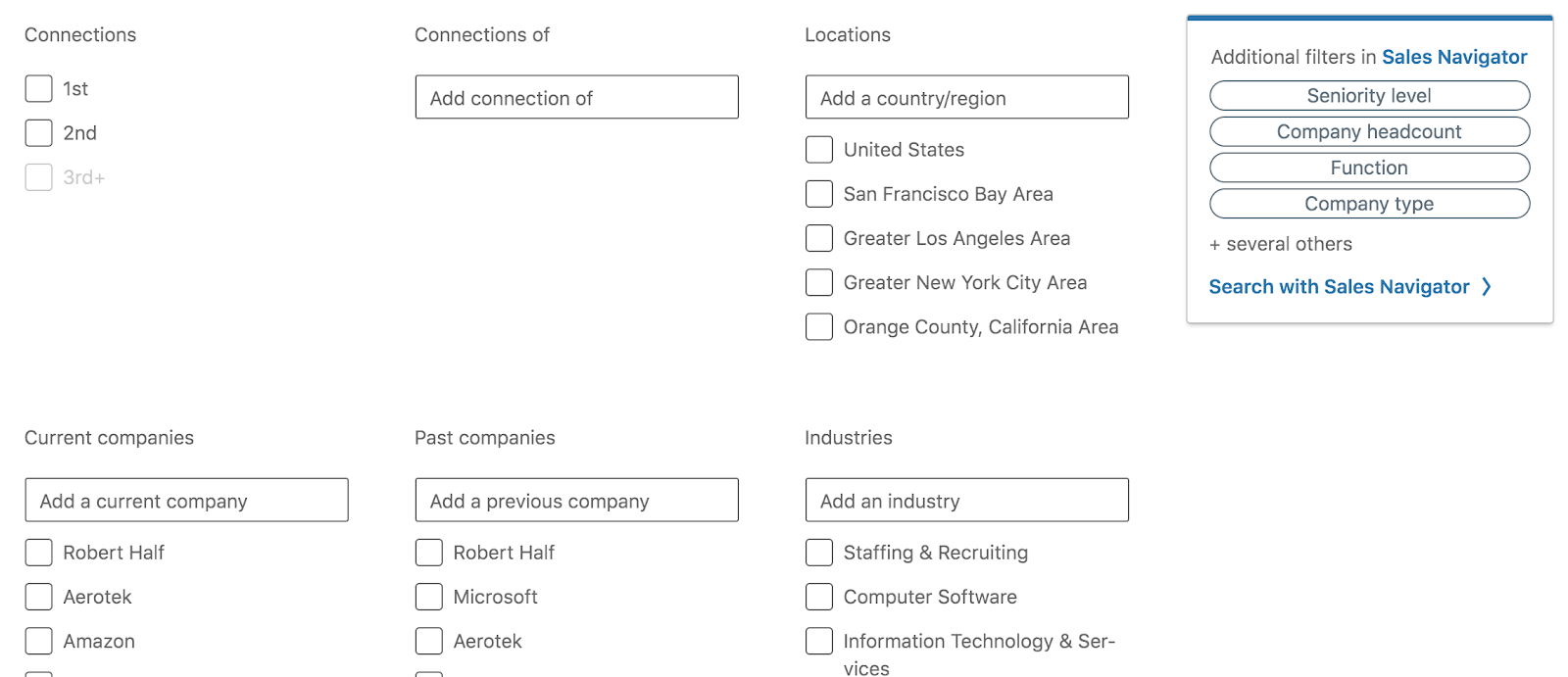
Broad Targeting (1M+ audience):
- Lower CPC: $4-$8 per click
- Higher volume but lower intent
- Good for brand awareness campaigns
Example: "Marketing professionals in North America"
Medium Targeting (100K-1M audience):
- Moderate CPC: $8-$15 per click
- Balanced reach and relevance
- Sweet spot for most B2B campaigns
Example: "VP of Sales at SaaS companies, 50-500 employees"
Narrow Targeting (<100K audience):
- Higher CPC: $15-$35+ per click
- Premium costs but laser-focused intent
- Best for high-value, niche solutions
Example: "Chief Revenue Officers at Series B fintech startups who recently posted about sales automation"
The LinkedIn targeting cost increases exponentially as your audience shrinks because you're competing with fewer advertisers for highly specific, valuable prospects.
But here's the counterintuitive part: Narrow targeting often delivers better ROI despite higher CPCs because the conversion rates are significantly higher.
📌 Pro tip: Start broad for data collection, then create lookalike audiences based on your best converters. This gives you the precision of narrow targeting with the cost efficiency of broader reach.
Bid Strategy and Ad Format
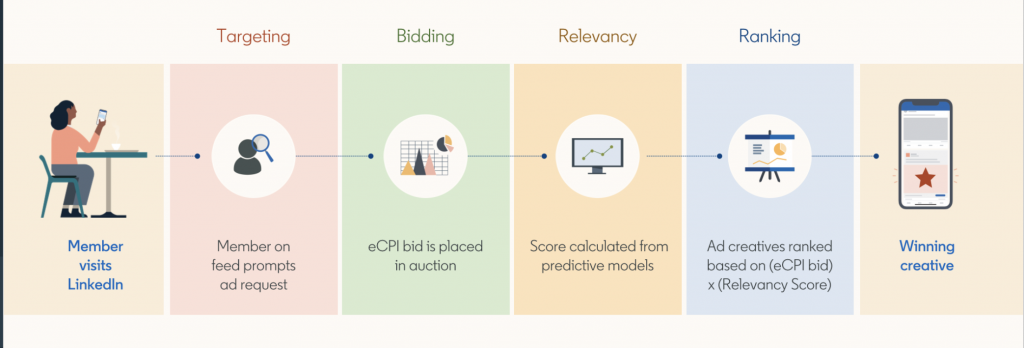
Your LinkedIn bidding model choice significantly impacts costs. Here's what each strategy delivers:
Bidding Strategies:
- Automated Bidding: LinkedIn optimizes for lowest cost per result (recommended for beginners)
- Manual CPC: You control maximum cost per click ($5-$50+ range)
- CPM Bidding: Pay per 1,000 impressions (best for awareness campaigns)
Ad Format Impact on Costs:
- Single Image Ads: Baseline cost, easiest to create
- Video Ads: 15-25% higher CPC but 3x better engagement
- Carousel Ads: 10-20% premium but allow multiple value props
- Event Ads: Lower competition = 20-30% cost savings
- Document Ads: Newer format with reduced competition
LinkedIn ad format cost varies based on content production requirements and competition levels. Video ads cost more per click but generate significantly better LinkedIn ad optimization results due to higher engagement and memorability.
Ad Quality Score & Engagement Metrics
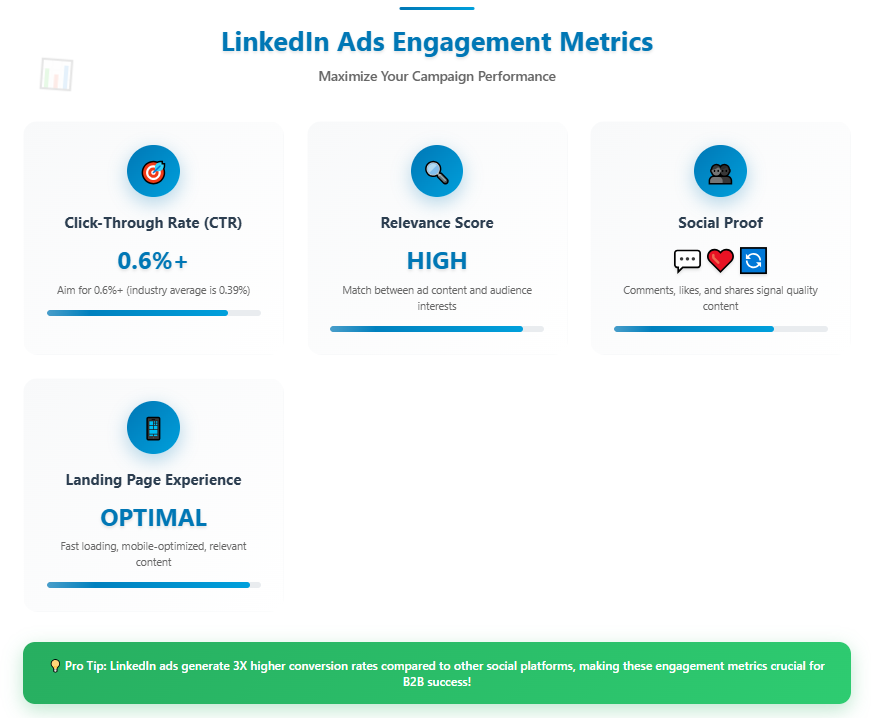
LinkedIn's algorithm rewards high-performing ads with lower costs and better placement. Your quality score depends on:
Key Performance Indicators:
- Click-Through Rate (CTR): Aim for 0.6%+ (industry average is 0.39%)
- Relevance Score: Match between ad content and audience interests
- Social Proof: Comments, likes, and shares signal quality content
- Landing Page Experience: Fast loading, mobile-optimized, relevant content
How to Lower LinkedIn CPL:
- Create thumb-stopping creative that encourages engagement
- Write compelling headlines that speak directly to pain points
- Use social proof and testimonials in ad copy
- A/B test everything: images, headlines, CTAs, and targeting
- Respond to comments quickly to boost engagement signals
The bottom line: LinkedIn ad optimization isn't just about tweaking settings – it's about creating content that your audience genuinely wants to engage with.
LinkedIn vs Other Platforms: Is the High CPL Worth It?
The Facebook vs LinkedIn lead cost comparison often raises eyebrows – LinkedIn's CPL can be 3-5x higher than other platforms.
But focusing solely on cost per lead is like judging a Rolex by its weight. The real question isn't whether LinkedIn costs more; it's whether the premium delivers proportional value in your B2B sales funnel.
CPL Comparison with Meta, Google, X (Twitter)
Here's how the major platforms stack up for B2B lead generation in 2026:
The LinkedIn vs Google Ads debate becomes clear when you factor in intent and context.
While Google captures people actively searching for solutions, LinkedIn reaches decision-makers in a professional mindset where business discussions are expected and welcomed.
Quality Multiplier Effect:
- LinkedIn leads close at 2.5x the rate of Facebook leads
- Average deal size from LinkedIn leads is 40% higher
- Customer lifetime value is 60% greater than other platforms
When you calculate true ROI, LinkedIn's premium CPL often delivers the lowest cost per customer acquisition.
A $100 LinkedIn lead that closes at 15% is worth more than five $20 Facebook leads that close at 1%.
Organic LinkedIn Outreach vs. Paid Ads: The Real Cost Difference
Most CPL benchmarks you'll find online are for paid LinkedIn advertising. But there's a second way to generate leads on LinkedIn — organic outreach through connection requests, InMails, and direct messages — and the economics look very different.
Paid LinkedIn ads: $45-$150 CPL on average, plus platform ad spend, plus management fees. Monthly budget to generate meaningful volume: $5,000-$15,000+.
Organic LinkedIn outreach: Done-for-you services like Cleverly run $397-$697/month. No ad spend. Leads come directly from personalized outreach to your target list. CPL, depending on reply rate and close rate, often falls below $50 for high-converting campaigns.
The trade-off: paid ads can scale faster and reach broader audiences; organic outreach produces warmer leads with higher trust but at lower volume per campaign.
For high-ticket B2B companies ($5K+ deal sizes) running outbound-led sales, organic outreach typically wins on ROI. You're not competing in an auction against better-funded advertisers, and the conversations start with a human-to-human message rather than an ad impression.
At Cleverly, we've managed 10,000+ LinkedIn outreach campaigns generating $312 million in pipeline revenue — almost entirely through organic outreach. The data shows that qualified leads generated through personalized outreach close at higher rates and with shorter sales cycles than the equivalent paid pipeline.
If you're evaluating LinkedIn lead generation costs, don't limit the comparison to ads. Organic outreach deserves a line in your budget model.
Platform Suitability for Different Funnel Stages
Understanding LinkedIn lead funnel positioning helps optimize your multi-platform strategy:
Platform CPL breakdown reveals that LinkedIn excels at bottom-funnel activities where purchase intent is highest. While other platforms generate cheaper top-funnel awareness, LinkedIn converts prospects who are ready to buy.
The verdict?
LinkedIn's premium pricing reflects premium value. While other platforms might fill your CRM with more contacts, LinkedIn fills it with better contacts who actually have the authority, budget, and need to buy your solution.
That's worth paying for!
Final Thoughts
After analyzing costs, benchmarks, and performance metrics, the answer depends entirely on your business model and sales strategy.
LinkedIn lead generation ROI isn't just about the platform – it's about whether your business can monetize high-quality, high-intent prospects effectively.
When LinkedIn Is Absolutely Worth It:
- High-ticket B2B sales ($10K+ deal sizes) where a single customer justifies significant acquisition costs.
- Complex sales cycles where relationship-building and trust matter more than volume.
- Niche markets where decision-makers are hard to reach through other channels.
- Account-based marketing strategies targeting specific companies or executives.
For these scenarios, paying $75-$150 per lead makes perfect sense when your average deal size is $50K and your close rate is 10-15%.
The math works beautifully!
B2B LinkedIn marketing 2026 success requires realistic expectations and proper measurement. Don't judge LinkedIn by cost per lead alone – measure it by cost per customer, lifetime value, and sales cycle efficiency.
The question isn't whether you can afford LinkedIn lead generation – it's whether you can afford to let your competitors dominate the platform while you chase cheaper, lower-quality leads elsewhere.
And if you don’t want to risk $30/Mo budget, then go for organic LinkedIn lead generation. And, don’t worry! We’re here to help.
At Cleverly, we've proven this same equation with organic LinkedIn outreach as well: 10,000+ clients, $312 million in pipeline revenue, and $51.2 million in closed deals. The ROI speaks for itself.

So, ready to dive into the world of organic LinkedIn lead generation with the same numbers as above? Book your free consultation today to know how we can help you!
Frequently Asked Questions
Free Resource
How to Scale a Profitable Cold Call System
Get the complete guide — download it instantly now.
Free Ebook
Download the Free Guide
Enter your details to get instant access.
You're all set! 🎉
Your ebook is downloading now.
Click below if the download didn't start automatically.